In this guide
What should a stair cleaning request include?
For a 2026 stair cleaning request in Monmouth County, list four details: each flight, its materials, the surfaces you want cleaned and any access limits. NJ Cleaning Pros reviews those details and confirms the accepted scope and price in writing before scheduling.
Start with the part of the house where the staircase begins and ends. A flight from an entrance to the bedrooms may have a different use and finish from a flight between the kitchen and a finished basement. Identify each one by destination so everyone can recognize it without relying on a photo.
Name the parts you want reviewed
A tread is the part you step on. The riser is the vertical face between treads, and a landing is the flat area at a turn or at the end of a flight. A request for vacuumed treads may leave the risers, tread edges and landing unaddressed unless they are named in the estimate.
Use the same detail for the handrail. The rail people grip, the vertical balusters under it and the larger posts at either end can be separate tasks. If dust is visible around the base of the posts, say where it is. That description is more useful than requesting that the whole railing be detailed.
Describe how the staircase is used
Tell the office whether the staircase serves a private home, the inside of a condo or a shared building. In a condo, the flight inside the unit and the stairs serving several units may have different permissions. For shared areas, say who can approve access and who will confirm which surfaces are covered.
Mention the busiest part of the route. An entry flight may collect loose soil from shoes while a bedroom landing may mainly collect lint. If only one section needs extra attention, point to the section. That makes it possible to review a targeted request without assuming the same condition everywhere.
How do carpet runners and hard steps change the scope?
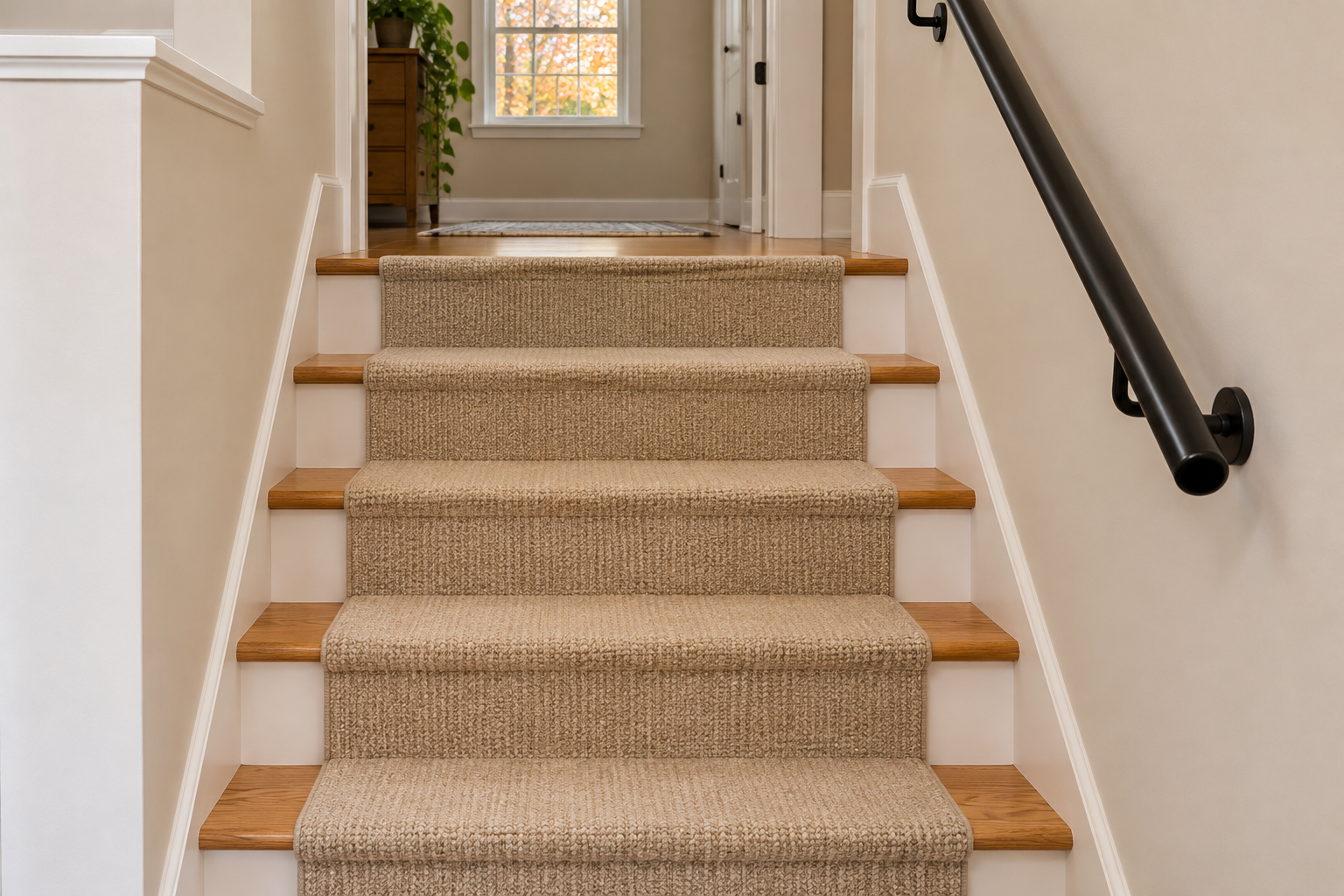
A staircase may combine carpet, exposed wood edges, painted risers and metal hardware within a few feet. List the surfaces separately and share any care instructions you have. The intended method should follow the material and its finish.
Separate vacuuming from a carpet treatment
For an attached runner, describe the center and the exposed edges as different areas. A request to remove loose debris from the runner can also specify corners and the upper landing. Shaw's carpet care guidance discusses selecting a suitable vacuum and adjusting the method for the carpet. Follow the instructions for the actual runner when they are available.
Spot treatment, extraction and work around a loose seam need separate discussion. Tell the office where a mark sits and whether you know what caused it. If the edge is lifting, explain that before the appointment. Do not count on cleaning to reattach a runner or restore a faded traffic line.
Identify the finish on exposed wood and rails
Bruce recommends dry dust removal for its hardwood flooring and advises against water or steam cleaning. That guidance illustrates why the installer or finish maker's directions matter when wood treads look similar. A sealed tread, painted riser and coated handrail may each call for their own approved product.
If you cannot identify a surface, say so and share the instructions or product labels you do have. NJ Cleaning Pros asks customers to supply cleaning products and brings equipment. The office can review the proposed products alongside the surfaces before confirming a method.
Which conditions need separate review?
Describe the issue in terms you can see. Loose grit on a step, a dull patch in the finish, and a sticky spot on the underside of a rail are different observations. Include where the issue appears and how widespread it is so the office can separate ordinary cleaning from specialty work.
Distinguish dust, residue and wear
Use a specific description such as loose dust on the first landing or a sticky patch on the grip near the lower post. Mention adhesive, paint drips, or an unknown cleaner used on a previous visit if you know about it. The office can then review the affected area and the material together.
A worn tread edge, scraped finish or faded strip of carpet can remain after ordinary soil is removed. If the goal is to change the appearance of a worn surface, describe that goal up front. Refinishing, carpet repair and replacing damaged hardware call for a different scope from household cleaning.
Identify access and maintenance issues early
Report loose railing parts, lifting carpet, broken stair nosing or missing lighting before anyone attempts the area. Keep the flight out of the confirmed cleaning scope until the access concern has been addressed or reviewed. Avoid trying to move a heavy item on the stairs just to prepare for the appointment.
A stairwell can also have tall walls, overhead fixtures or upper ledges outside normal reach. Name these separately if you want them evaluated. The estimate should make clear which accessible surfaces are accepted and which would need other arrangements.
- Loose grit or lint and the step where it collects
- An unknown sticky or greasy spot and its location
- Visible peeling, loose pieces or worn finish that need review
| Observation | Include in the request |
|---|---|
| Loose soil | Name the tread, landing or edge that collects it. |
| Adhesive or unknown residue | Describe the location and request a separate review. |
| Loose rail or lifting runner | Flag the access issue before confirming work. |
How can you prepare the route before a visit?
Think through how people move between the two ends of the staircase. In a home where the flight is the only route to bedrooms or a basement, agree on the order of work and when people will need to pass. Tell the office if access depends on another occupant or a building contact.
Share the route in four steps
You can send the information in a short note. Include the city or ZIP code and the type of property first, then describe each flight so the office can match it to the home details in the estimate.
For example, an illustrative townhouse request might name one interior flight with an attached runner, exposed wood margins, and a painted wall rail. The customer might request loose debris removal on both the runner and the landing, with a separate review of two marks on the risers.
Keep the route clear and plan around traffic
If you can do so safely, take shoes, baskets and small loose items off the steps and both landings. Let the team know where pets will be while the route is being cleaned. For a shared staircase, tell the office which doors or walkways must remain usable and who manages any restrictions.
If you want to show the materials, a tight photo of a tread or the rail finish can help. Leave out house numbers, names and people. A description is enough to start if a photo would be inconvenient or if taking one would require standing in an unsafe position.
- Name the lower and upper ends of each flight.
- List the tread, riser, runner and rail materials you know.
- Identify the surfaces and marks you want reviewed.
- State how people use the stairs and flag any access concern.
What should the written estimate say about the stairs?
Read the stair line in the context of the selected residential service. The written scope should identify the flight and landing, the surfaces accepted, and any separate items still under review. Compare those details to your request before accepting a visit.
Use a scope you can check at the walkthrough
A useful entry could say: lower hall to upper landing, attached runner and accessible exposed tread edges, with the grip of the wall rail included. If the risers, balusters, adjacent walls or a carpet treatment are still open questions, ask for them to be identified separately. This makes it clear what to check afterward.
An ordinary dust removal request and a request to treat an unknown spot should not share a single unexplained description. Ask which surfaces and actions are accepted and which need a decision before the appointment. Confirm any additional work in writing before the visit.
Give the office enough information to review the whole job
Share bedrooms, bathrooms, other requested rooms, current condition and preferred timing with the stair details. If the flight leads to an extra space such as a finished basement, identify the spaces you actually want included. The office can review the stair request alongside the other areas and confirm accepted work and pricing in writing.
After the visit, use the scope to identify the step, rail section or landing you have a question about.
What else should homeowners know?
- Are handrails automatically included with stair cleaning?
- Confirm the handrail in your written estimate. Ask about the part you grip, balusters, posts and brackets separately when they need attention. Share the material and condition if you know them so the office can review which surfaces and methods are appropriate.
- Can I request vacuuming without carpet extraction?
- Yes. Describe ordinary vacuuming of the attached runner and tell the office whether you want the tread edges and landing reviewed too. If you also need a stain evaluated or the runner is loose, list that concern separately before agreeing to the scope.
- What should I say if the stairs are inside a condo?
- Say whether the steps are within your unit or part of a shared entrance or corridor. For common areas, identify who can approve the work and grant access. Share any building rules affecting the route and identify which flight belongs in the estimate.
- What if the rail finish is unknown or the stairs are worn?
- Share the condition and any care directions you have. The office can review accessible household cleaning and flag a surface that needs more information. Discuss visible damage, flaking finish or loose components separately before anyone works in that area.
Sources and further reading

About NJ Cleaning Pros
NJ Cleaning Pros is an owner-run residential and commercial cleaning company based in Long Branch, serving Monmouth County, New Jersey. Meet our company or call (609) 412-2789 to discuss your home.