
In this guide
What should an office restroom cleaning request describe?
Start with a room inventory that someone unfamiliar with the building can understand. Identify each restroom by its floor or a simple room label, then list the fixtures and accessible surfaces. Two restrooms with the same floor area can have different layouts, materials and responsibilities. Give the office a useful description before asking for a recurring proposal; a residential bathroom estimate is not a commercial quote.
Count fixtures and name the surfaces
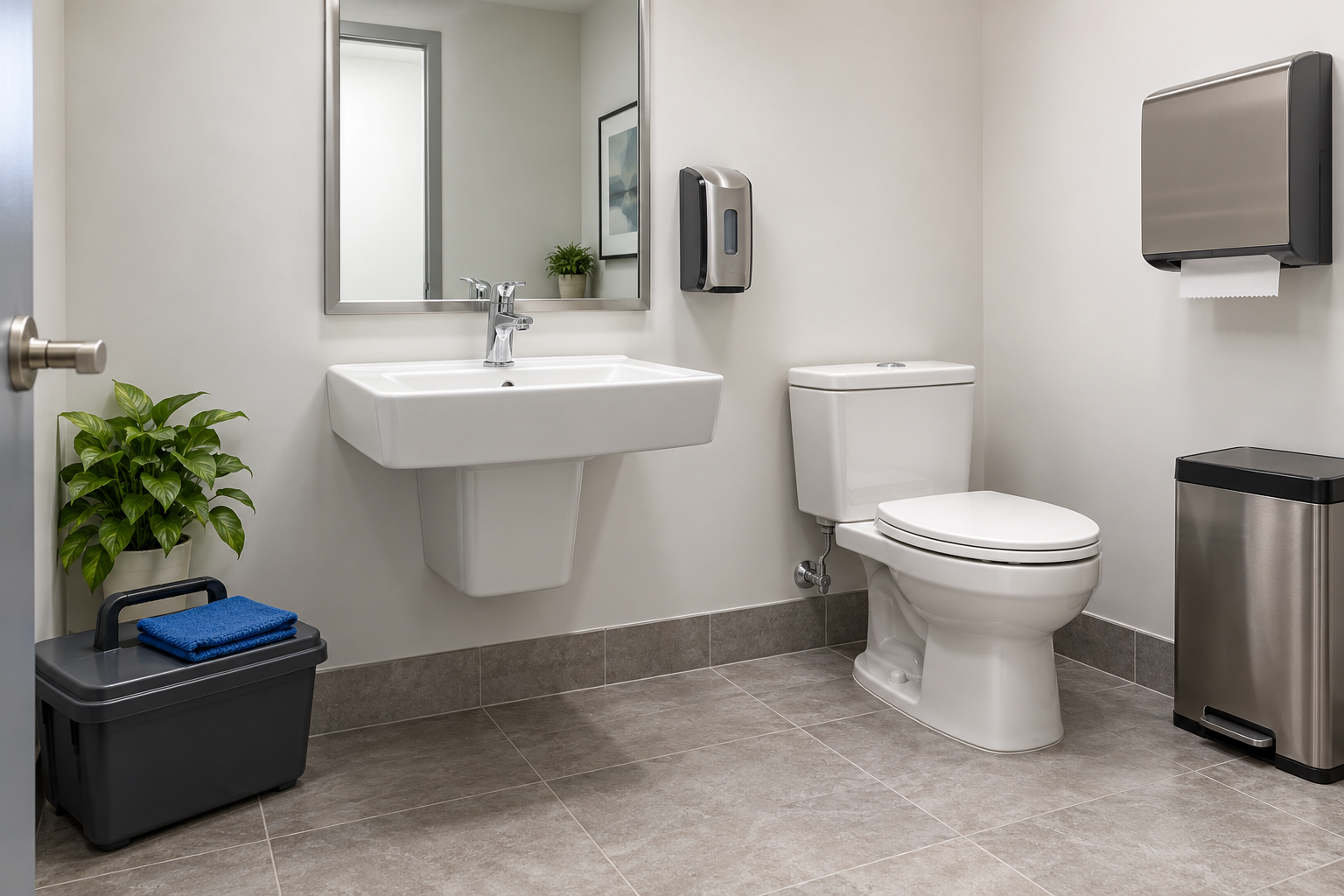
Record toilets, urinals if present, basins, mirrors, counters, stall partitions and floor materials. Include door handles, switches and dispenser exteriors among the surfaces you want reviewed. Specify whether a restroom is shared with another tenant or controlled by the building manager. An office suite may have no authority to commission work in a shared hallway restroom, even when its staff use that room daily.
Describe existing scale, stained grout, damaged finishes or recurring odors without promising a diagnosis. A written note such as marks around the faucet is more useful than an instruction to restore everything. Repair, refinishing and plumbing work need the responsible trade. Keep those issues separate from the cleaning checklist so neither the office nor the team assumes they have been accepted as routine cleaning.
Explain use without sharing private information
Describe use, such as staff-only weekdays or customer access during opening hours. Mention unusual peaks and between-visit care. Leave employee names, customer records and private notices outside the estimate process.
How should cleaning and disinfection be separated?
Use task names that explain what is requested. Cleaning visible soil, treating a surface with a disinfectant and replenishing supplies are separate responsibilities. A proposal should identify any agreed disinfection step and the surfaces it covers. Do not interpret a clean appearance, a fresh scent or an advertisement as a guarantee about germs, employee health or regulatory compliance.
Identify high-touch priorities
CDC facility guidance includes restroom fixtures among surfaces that are touched frequently and recommends regular cleaning of high-touch surfaces. For your written plan, identify the actual handles, faucets, switches and other touch points in the room. The practical priority list comes from the space itself. It should not be replaced by a generic checklist copied from a different type of building.
Ask how the selected tasks fit the agreed visit rather than assuming every surface receives the same treatment. A mirror, a painted partition and a stone countertop may require different care. Make manufacturer restrictions available before work is approved. The goal is a defined process for suitable surfaces, not an unsupported promise that any product can be used everywhere.
Confirm the product instructions
CDC advises cleaning surfaces before sanitizing or disinfecting them. EPA explains that an EPA-registered product must be used according to its label, including its approved use and contact time. That time is product-specific; do not invent a universal number of minutes. Confirm which suitable products will be available and whether the requested process can be completed under the room's actual access arrangements.
Who supplies products, paper goods and waste arrangements?
NJ Cleaning Pros clients provide cleaning products, and the company brings cleaning equipment. Commercial consumables still need an explicit agreement: soap refills, paper towels, toilet tissue and bin liners should not be assumed to arrive with a cleaning visit. Name a responsible person for ordering and keeping approved stock available, without treating the cleaning proposal as a supply subscription.
Make restocking an agreed task
Specify whether the team is asked to refill compatible dispensers from stock already on site, report low supplies, or leave replenishment to office staff. Provide safe access to any required cabinet or dispenser key through the agreed handoff. Confirm the refill type rather than relying on a similar-looking container. A locked cupboard or an empty box can prevent an otherwise agreed restocking task.
Define ordinary waste handling
Agree which restroom bins are included, which liners are provided and where ordinary bagged waste may be placed. Mention access restrictions for the building's collection area. Sharps, blood, unknown chemicals or other potentially hazardous material require a separate response from the responsible facility contact; do not put them into an ordinary office-cleaning request. This guide does not describe specialized waste collection or remediation services.
- List the approved cleaning products and where they are stored.
- Identify soap, tissue, towel and liner responsibilities.
- Confirm dispenser access and compatible refills.
- Name the permitted location for ordinary bagged waste.
| Responsibility | Confirm in writing |
|---|---|
| Cleaning products | Client provides suitable products |
| Equipment | Company brings equipment |
| Consumables | Stock and restocking tasks agreed separately |
How do access and timing affect the written plan?
Explain when the restroom can be taken out of use and who is responsible for communicating with building occupants. A preferred early, late or weekend visit is a request, not confirmed availability. The team also needs the actual building arrangements, including entry, parking, stairs or elevator access, and the location of the rooms within the suite.
Arrange access without exposing credentials
Tell the office whether someone will meet the team or whether the building has an established contractor check-in procedure. Do not put alarm codes, door credentials or photographs of keys into a public review or marketing form attachment. Agree on a suitable private handoff for any information needed after the scope and appointment are confirmed. Access must be workable before the visit is treated as ready.
If the room is occupied, inaccessible or undergoing repairs, staff need a clear person to contact. Decide who may authorize a change in the selected work and how an unfinished task will be recorded. A cleaner should not have to guess whether to enter a closed area or interrupt a meeting to resolve an access question.
Distinguish visit frequency from between-visit care
Choose a proposed schedule around use, condition and staff responsibilities, then review it with NJ Cleaning Pros. No single weekly schedule suits every office restroom. Your staff may still need to report spills, replenish essential supplies or handle an unexpected incident between visits. A recurring cleaning arrangement does not create continuous monitoring or an on-call response unless a separate service has actually been agreed.
What should be confirmed before accepting an estimate?
A useful proposal makes the boundaries readable. Review the selected rooms, fixture list, accessible surfaces, product instructions, ordinary waste handling and any restocking tasks together. Ask about items that remain unclear before accepting the work. Commercial pricing depends on the actual space and requirements; copying a residential bathroom price does not establish an office restroom rate.
Review scope, condition and exceptions together
Separate routine tasks from periodic detail work such as additional partition cleaning or accumulated buildup requiring closer assessment. Note any damaged or restricted surface and the party responsible for repairs. A preexisting mark should not be described as a promised removal result. If the condition changes before the visit, update the request so the written scope can be reviewed rather than relying on an outdated description.
For ordinary office work in Monmouth County, contact NJ Cleaning Pros with your room inventory and preferred arrangements. The company can review the request and confirm scope and price in writing before a reservation. Keep medical, industrial or other regulated settings outside the assumptions of this guide. Their requirements cannot be inferred from an ordinary office checklist or a general cleaning proposal.
Use a short approval checklist
Read the proposal alongside your own list, then clarify missing responsibilities with the office. Keep one current version available to the person who manages access and supplies. After a visit, report a specific missed agreed task or a changed condition instead of expanding the checklist informally. This gives both sides a practical reference for future visits without assuming a guaranteed result or adding work that was never reviewed.
- Identify the selected restrooms and fixtures.
- Confirm surfaces, condition and product instructions.
- Separate cleaning, any specified disinfection and restocking.
- Agree on access, waste handling and staff responsibilities.
- Confirm the commercial scope and price in writing.
Office cleaning questions
- Is office restroom cleaning priced like a bathroom at home?
- No. A residential bathroom estimate does not establish a commercial cleaning price. An office request needs review of the selected rooms, fixtures, condition, usage, access and responsibilities. Share those details with NJ Cleaning Pros and ask for the agreed work and price in writing. Do not assume that a room count includes restocking or every periodic detail task.
- Does an ordinary cleaning visit automatically include disinfection?
- The written scope should state any specified disinfection tasks and the surfaces covered. Cleaning and disinfection are different processes, and product labels determine suitable uses and instructions. Do not infer a germ-removal guarantee from a clean appearance. Explain your facility requirements before the estimate; specialized or regulated work needs separate assessment rather than assumptions from an ordinary office plan.
- Will the team bring toilet paper, soap and cleaning products?
- Clients provide cleaning products, while NJ Cleaning Pros brings cleaning equipment. Paper goods, soap refills and bin liners need a separate responsibility in the commercial scope. Confirm whether suitable supplies will be on site and whether refilling compatible dispensers is included. An agreement to clean a restroom is not automatically an agreement to purchase or deliver consumables.
- Can the restroom be cleaned while the office is open?
- Describe the hours when the room can be made available, whether occupants have an alternative restroom and who will coordinate access. NJ Cleaning Pros must review the practical arrangements and confirm availability. Opening hours alone do not establish an appointment. Tell the office about building check-in, locked storage or repairs that could prevent the agreed tasks from being completed.
Sources and further reading
About NJ Cleaning Pros
NJ Cleaning Pros is an owner-run residential and commercial cleaning company based in Long Branch, serving Monmouth County, New Jersey. Meet our company or call (609) 412-2789 to discuss your office or commercial space.


