In this guide
What exactly do you mean by trash can cleaning?
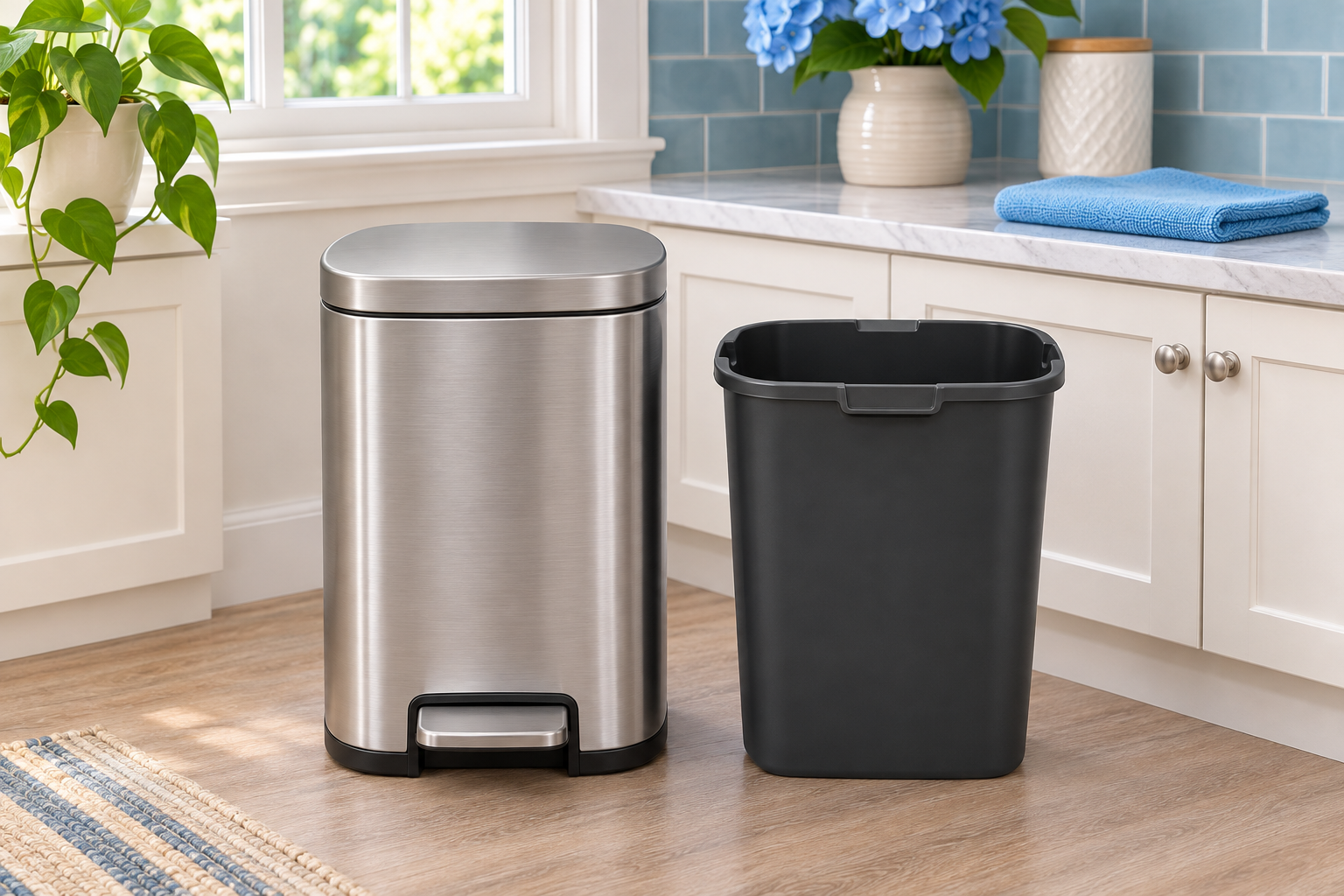
A kitchen waste container can have several separate parts: the outside shell, lid, pedal, rim, inner bucket and the floor beneath it. Naming those parts prevents a familiar misunderstanding. A request to empty the kitchen trash usually describes handling a bag; it does not tell the cleaner whether you also want the container itself reviewed.
Separate bag removal from surface cleaning
Specify whether the bag will already be removed and whether a replacement liner will be available. Mention the designated disposal location without assuming the team can enter a locked communal trash room. If a building requires a key, particular bag or timed collection, explain that before scheduling. Those access arrangements belong in the plan alongside the cleaning tasks.
Describe each container rather than the room alone
For a hypothetical example, a homeowner might request the exterior of one kitchen step can and the removable plastic bucket from one bathroom bin. That is more precise than saying all trash cans. Include the number, approximate size and room location of each container. Outdoor carts, shared building dumpsters and commercial waste equipment require separate review and should not be added by assumption.
Which surfaces and materials need separate instructions?
A stainless-looking finish does not identify every material in the container. Coated metal, painted panels, plastic lids, rubber seals and electronic controls may appear on the same product. Keep the manufacturer and model available when you can. If you cannot identify the finish, record that uncertainty instead of selecting a stronger product to compensate.
Check the finish and manufacturer guidance
The manufacturer is the appropriate source for the particular container's care limits. A product support page may distinguish models or provide cleaning instructions; it does not establish that every stainless steel can accepts the same chemical or tool. Tell NJ Cleaning Pros about special coatings, scratches, peeling surfaces or previous damage so that ordinary soil is not confused with a finish problem.
Identify removable and powered components
A lift-out bucket is different from the surrounding mechanism. Explain whether it removes normally and whether the lid has a sensor, battery compartment or powered feature. Do not expect the team to dismantle a pedal, force a jammed bucket, open electronics or repair a hinge. The written scope should identify accessible surfaces and leave uncertain components for clarification before any work begins.
| Part | Detail to share | Clarify separately |
|---|---|---|
| Exterior shell | Material and finish | Polishing or scratch repair |
| Inner bucket | Removable, empty, condition | Interior washing and drying |
| Lid or sensor | Model and care instructions | Electrical or mechanical work |
How should condition and hygiene concerns be described?
Describe visible residue and where it is located without promising a particular result. A dry fingerprint on an exterior panel is different from liquid underneath a liner, a damaged bucket or a recurring odor. Photos can help show condition when shared through the approved estimate process; avoid including mail labels, private paperwork or people in the image.
Report ordinary residue and unresolved odors
Tell us whether the problem is on the outside, under the lid, around the rim or inside the bucket. If an odor persists after normal emptying, say when you notice it and whether the source is known. Do not assume a surface wipe will remove every smell. A damaged container, hidden leak or pest concern may require another remedy rather than more scrubbing of the visible shell.
Keep cleaning and disinfection distinct
CDC guidance distinguishes routine cleaning from disinfection. A request for a clean-looking bin should not be treated as a request for a particular germ-killing process. If disinfection is requested, the product, compatible surface and label directions need review. Do not mix cleaning products or improvise a chemical combination. NJ Cleaning Pros does not promise sterilization, medical outcomes or complete odor removal through an ordinary cleaning estimate.
What should be ready before the visit?
Preparation is about making the agreed surfaces accessible. It does not require you to perform the cleaning first. Tell us what will be empty, which parts can be removed normally and where the container can be accessed. Confirm the plan before moving a heavy or awkward bin, especially when it sits inside a fitted cabinet or beside stored household products.
Agree on contents and access
Do not leave the team to decide whether loose items are waste, recycling or belongings. Remove documents and valuables from the work area, and identify the approved bag and disposal arrangement. Mention stairs, tight cabinet openings and building rules. A pull-out cabinet system is not just a freestanding can: tracks, surrounding wood and moving hardware are separate surfaces with separate access questions.
Confirm the drying and replacement plan
If an inner bucket is accepted for interior cleaning, ask how its return to use will be handled. The plan should account for the manufacturer's instructions and the place available for the task. Avoid assuming that any sink, bathtub or outdoor hose is available to use. Replacement liners, reassembly and returning the container to its location should also be clarified rather than left implicit.
- List each indoor container and the requested parts.
- Share material, condition and manufacturer instructions when available.
- Confirm who removes the contents and supplies replacement liners.
- Agree on access, disposal and any drying or return-to-use arrangements.
- Review the accepted tasks and price in writing before scheduling.
How does this fit a recurring or deep cleaning request?
The service name alone is not a complete task list. Recurring maintenance, a first visit and a deeper cleaning request can involve different room priorities, but each still needs a clear scope. Identify the container task alongside the other kitchen or bathroom work instead of assuming that an upgrade automatically adds every removable part or hidden surface.
Set a realistic recurring priority
For recurring visits, explain which surfaces need routine attention and which need review only when visibly dirty. CDC guidance describes cleaning frequency according to use and visible condition rather than a universal schedule for every object. Household habits, the container design and spills can change what needs attention. A service interval therefore does not replace reporting a new condition or requesting a changed task.
Keep additional work and prices explicit
An indoor can is not a separate published flat-rate service in this guide. NJ Cleaning Pros uses its current estimate policy for eligible residential requests and reviews unusual tasks before confirming a price. Share the property type, city or ZIP, bedrooms, full and half bathrooms, service, extras, condition and preferred date. Commercial facilities and unusual waste conditions should be reviewed according to their own scope, rather than priced with a residential example.
- A new stain does not establish a removable stain.
- An empty bag does not establish an empty or clean bucket.
- A deep cleaning label does not establish appliance or hardware dismantling.
- A preferred date does not establish confirmed availability.
What should the written request include?
Use a short description that connects the container to the room plan. Include enough detail to distinguish exterior wiping from interior washing, and flag any uncertainty. The purpose is a reviewable agreement, not a guarantee that every requested task can be accepted. Keep any safety, material or access questions visible until they are resolved.
Use a concrete example without assuming acceptance
A hypothetical request could say: one freestanding kitchen step can, exterior shell and lid only; bag removed before arrival; finish instructions available; no interior bucket washing requested. A second example might ask for review of an empty removable bathroom bucket with visible residue. These are planning examples, not descriptions of completed NJ work or promises that either task is automatically included.
Confirm changes before the appointment
If the container is fuller, damaged or harder to reach than described, tell us before the visit. A change in condition can affect the accepted task and the written estimate. Review any exclusions along with the final room list, and keep the agreed scope available. Use the estimate process to discuss the request with NJ Cleaning Pros before scheduling; do not rely on a generic checklist as a booking confirmation.
What else should homeowners know?
- Does taking out the trash include washing the can?
- Not automatically. Bag handling, exterior wiping and removable bucket cleaning are separate tasks. Ask for the particular surfaces and confirm the accepted scope in writing.
- Can I request cleaning inside a pull-out cabinet trash system?
- Share the model, access and surfaces involved. The bin, cabinet interior, tracks and mechanism are different parts. Do not assume dismantling, repairs or moving fitted equipment is included.
- Will cleaning remove every odor from my kitchen bin?
- No guaranteed odor result is offered. Describe the location and condition so the source and appropriate scope can be reviewed; damage, leaks or pest issues may need another remedy.
- What details are needed for an estimate?
- Provide the property type, city or ZIP, room and bathroom counts, cleaning type, condition, extras and preferred date, plus the containers and surfaces requested. Scope and price require written confirmation before scheduling.
Sources and further reading

About NJ Cleaning Pros
NJ Cleaning Pros is an owner-run residential and commercial cleaning company based in Long Branch, serving Monmouth County, New Jersey. Meet our company or call (609) 412-2789 to discuss your home.


