
In this guide
What does dining table and chair cleaning mean?
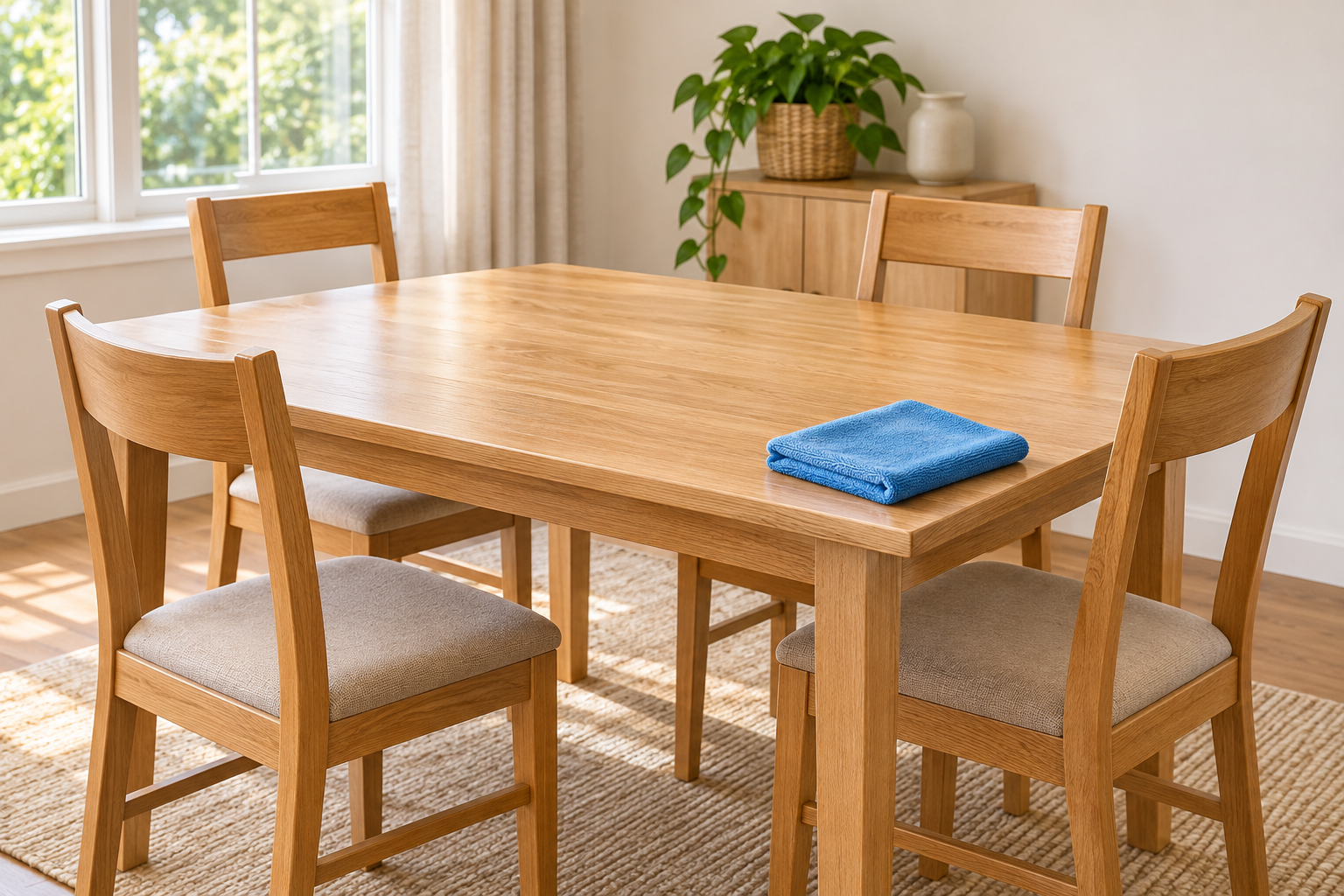
A dining area contains more than a tabletop. Chair backs, legs, seats, table edges and the surrounding floor present different materials and access. Describe the surfaces you want reviewed instead of asking for everything to be deep-cleaned without explaining what that includes.
Name the surfaces rather than just the room
Start with the table, the number of chairs and any bench or sideboard. Separate the tabletop from its edge, apron, pedestal or legs. On chairs, distinguish hard seats, backs and rungs from upholstered cushions. A glass insert, metal frame or woven panel needs its own description even when it belongs to the same furniture set.
An apartment dining nook and a separate dining room can require similar furniture care but different access arrangements. Mention a breakfast counter, additional dining set or finished-basement seating area if you want it reviewed. Do not assume those spaces are described by the bedroom count or automatically covered by the words dining room.
Describe loose debris and attached marks separately
Explain whether you see ordinary dust, crumbs, sticky residue, water rings, scratches or a damaged coating. These observations help define the request; they do not establish the cause or promise that suitable cleaning can remove every mark. A worn edge may remain visibly worn after dirt has been removed.
Use a short list of priorities rather than a promised result such as make it look new. For example, ask about crumbs on accessible hard seats and residue on the table edge. Identify uncertain marks for review. Avoid treating refinishing, stain removal or repair as an automatic part of household surface cleaning.
Which material and care instructions apply?
The finish matters as much as the furniture’s general appearance. Painted wood, veneer, glass, stone and coated metal do not share one universal cleaning method. Provide the manufacturer or care information you already have, especially for recently purchased, refinished or unusual pieces.
Use the actual furniture instructions
IKEA’s instructions for its white DANDERYD dining table specify a damp cloth with a mild cleaner, followed by wiping dry with a clean cloth. That is a product-specific example, not permission to apply the same method to every table. Check the instructions for your own model and finish before selecting products.
Tell NJ Cleaning Pros about known restrictions, an unfamiliar coating or recent refinishing. Do not guess a curing interval from how dry the surface feels. If instructions are missing or a finish appears unstable, identify that uncertainty before the appointment so the proposed work can be reviewed rather than improvised.
Keep fabric care separate from hard-surface wiping
A chair can combine a wooden frame with a fabric seat. The frame and upholstery should not be treated as one surface. Ashley’s care guide distinguishes upholstery cleaning codes and separate material categories. A household wipe-down does not establish that a fabric can be wet-cleaned, extracted or treated for stains.
Report upholstery, leather, cane, woven material and removable covers when describing the set. Ask what can be accepted within the proposed visit and what should remain excluded or referred for specialist review. Do not assume machine washing, steam cleaning, polishing, oiling or fabric treatment is included because the room itself is being cleaned.
- Identify table and chair materials, including mixed surfaces.
- Share the model’s care instructions and any product restrictions.
- Flag loose joints, peeling finishes or other visible damage.
- List upholstery and restoration work as separate questions.
| Surface | Clarify before the visit |
|---|---|
| Hard table or chair frame | Material, finish and accessible sections |
| Fabric or leather seat | Care instructions; separate treatment review |
| Marked or damaged coating | Condition; no restoration promise |
How should you prepare the dining area?
Preparation should create access to the accepted surfaces without asking you to complete the cleaning first. Agree who will handle objects, textiles and furniture before the visit. The plan should also identify anything that will stay in place, so expectations match the access actually available.
Clear tableware and personal belongings
Remove dishes, food, papers, electronics and fragile decorations from the surfaces selected for cleaning. Decide where those belongings will go before the team arrives. A stack of paperwork should not be sorted or relocated by assumption; a centerpiece may be delicate even when it looks easy to lift.
Discuss tablecloths, placemats, runners and seat cushions separately. Removing them for access is different from laundering or treating them. The customer supplies cleaning products under the current NJ arrangement, while the company brings equipment. Confirm appropriate products for the accepted furniture materials instead of assuming an unfamiliar product is suitable.
Agree how chairs and blocked areas will be handled
Tell the team about heavy tables, delicate chairs, loose legs, benches fixed against a wall and tight spaces around a rug. Do not assume furniture will be lifted, disassembled or moved into another room. A clear floor path matters, but it does not make every item safe or practical to reposition.
Identify inaccessible sections and any movement you will arrange yourself. Chair legs beneath a crowded table, a pedestal beside stored boxes and a sideboard covered in decorations are different access situations. Confirm which parts can be addressed in place and which remain excluded, rather than leaving that decision until the appointment begins.
- List the furniture and surfaces you want reviewed.
- Record materials, care instructions and visible condition.
- Clear loose objects and decide who handles textiles.
- Identify movement restrictions and inaccessible sections.
- Confirm the accepted tasks, exclusions and price in writing.
How does the task fit your home-cleaning service?
The visit type provides context, but it is not a substitute for an agreed furniture scope. Maintenance of accessible surfaces, initial buildup and cleaning in an empty property can involve different starting conditions. Explain the situation honestly so the request can be reviewed with the rest of the home.
Distinguish the first visit from recurring maintenance
The general first NJ appointment is a deep clean; move-specific and post-construction requests are reviewed as those separate services. Describe the dining furniture’s condition even when choosing a service label. Neither deep nor recurring cleaning should be interpreted as unlimited furniture detailing or guaranteed removal of old marks.
For recurring visits, confirm which accessible dining surfaces belong in the agreed plan. Tell the team if the room is used for crafts, work or storage as well as meals, since the objects and residue may differ. A changed arrangement can change access; it does not silently add organizing, repairs or specialist treatment.
Separate surrounding surfaces and unusual conditions
The dining floor, nearby baseboards, cabinet interiors and hanging fixtures are separate surfaces. Name the ones you want reviewed rather than assuming furniture cleaning covers every item around it. High fixtures, electrical components, fragile display pieces and heavy furniture movement need their own access and scope discussion.
If furniture has renovation residue, paint, adhesive, suspected hazardous dust or significant damage, explain that before requesting an ordinary home-cleaning estimate. Do not describe an uncertain substance as routine crumbs or dust. The appropriate next step is scope review, without a promise of restoration or a claim that every material can be treated.
What information supports a useful estimate?
The online calculator provides preliminary estimates for supported residential inputs. It does not establish a universal charge per dining chair or turn an unusual furniture-care request into accepted work. Describe both the property and the specific task so the estimate has a clear basis.
Send property details and furniture priorities
State whether the property is a house or apartment/condo, its city or ZIP, bedrooms, full bathrooms and half bathrooms, service type, extra rooms or finished basement, condition and preferred date. Add the table and chair count, materials, requested surfaces and any restrictions or blocked areas.
A short description is often enough to start the review. If a photograph is requested, avoid including personal documents, faces, addresses or other private belongings. Do not submit a residential room-count result as an office or restaurant quote; commercial spaces need a review of their own actual tasks and conditions.
Confirm the accepted boundaries before scheduling
Review inclusions, exclusions, preparation responsibilities and price together. Ask how inaccessible areas or newly noticed finish concerns will be handled before additional work is accepted. Written scope should explain what the visit addresses without promising that cleaning will reverse age, wear, discoloration or damage.
Submitting an estimate request does not reserve a time or prove team availability. NJ Cleaning Pros reviews requests within its confirmed service area and clarifies the accepted work before scheduling. Keep the final message focused on the surfaces that matter and the uncertainties that still need an answer.
What else should homeowners know?
- Does dining chair cleaning include upholstery shampooing?
- Do not assume it does. Identify fabric, leather, woven seats or removable covers separately from hard frames. Share the furniture’s care instructions and ask which work can be accepted; extraction, stain treatment and laundering are separate scope questions.
- Will cleaning remove water rings and scratches from my table?
- Suitable household cleaning does not guarantee removal of rings, scratches or finish damage. Describe the marks for review. Refinishing, polishing, repairing coatings and restoring furniture should not be assumed from a request to clean dining surfaces.
- Should I empty the table and move every chair first?
- Clear loose belongings from the accepted surfaces and agree on movement beforehand. Identify fragile objects, heavy furniture, loose joints and blocked areas. Do not assume the team will move a table, disassemble chairs or handle laundry and personal paperwork.
- Can I obtain a fixed quote from the chair count alone?
- Chair count helps describe the task but does not establish a complete cleaning price. Share property details, materials, condition, service and access. The official calculator gives supported preliminary residential estimates; the accepted scope and price are confirmed in writing before scheduling.
Sources and further reading

About NJ Cleaning Pros
NJ Cleaning Pros is an owner-run residential and commercial cleaning company based in Long Branch, serving Monmouth County, New Jersey. Meet our company or call (609) 412-2789 to discuss your home.


